

The Ever-Popular Bivalve
By the Gastronomes
We are both fans of these slippery mollusks and readily admit they aren’t for everyone but sometimes I think if people knew a little more about them, they might give them a go. Oysters are one of the sea’s greatest delicacies, and mastering them is a true culinary art. That being said, even though November is billed “National Oyster Month”, we thought it would be fun to let those of you who aren’t already “in the know” in on how to prepare them our favorite ways now. This way you will be prepared for your November celebration! Whether you are serving them raw on the half shell or roasting them over an open flame, here is a pretty comprehensive guide to shucking, roasting, and eating oysters like a pro.
The Art of Shucking
Shucking can be intimidating, but it is all about leverage and technique rather than brute force. You can see some samples of really great shucking and some pretty scary shucking at the Old Town Oyster Shucking competition in front of O’Connell’s on the 10th. Info about it and the other Oyster Week happenings are in the calendar section. Mr. Gastronome can hold his own in the shucking realm but prefers the ease of roasting them. You will see why in this write up. There are also videos available online that will be handy for those of you who are more “visual”.
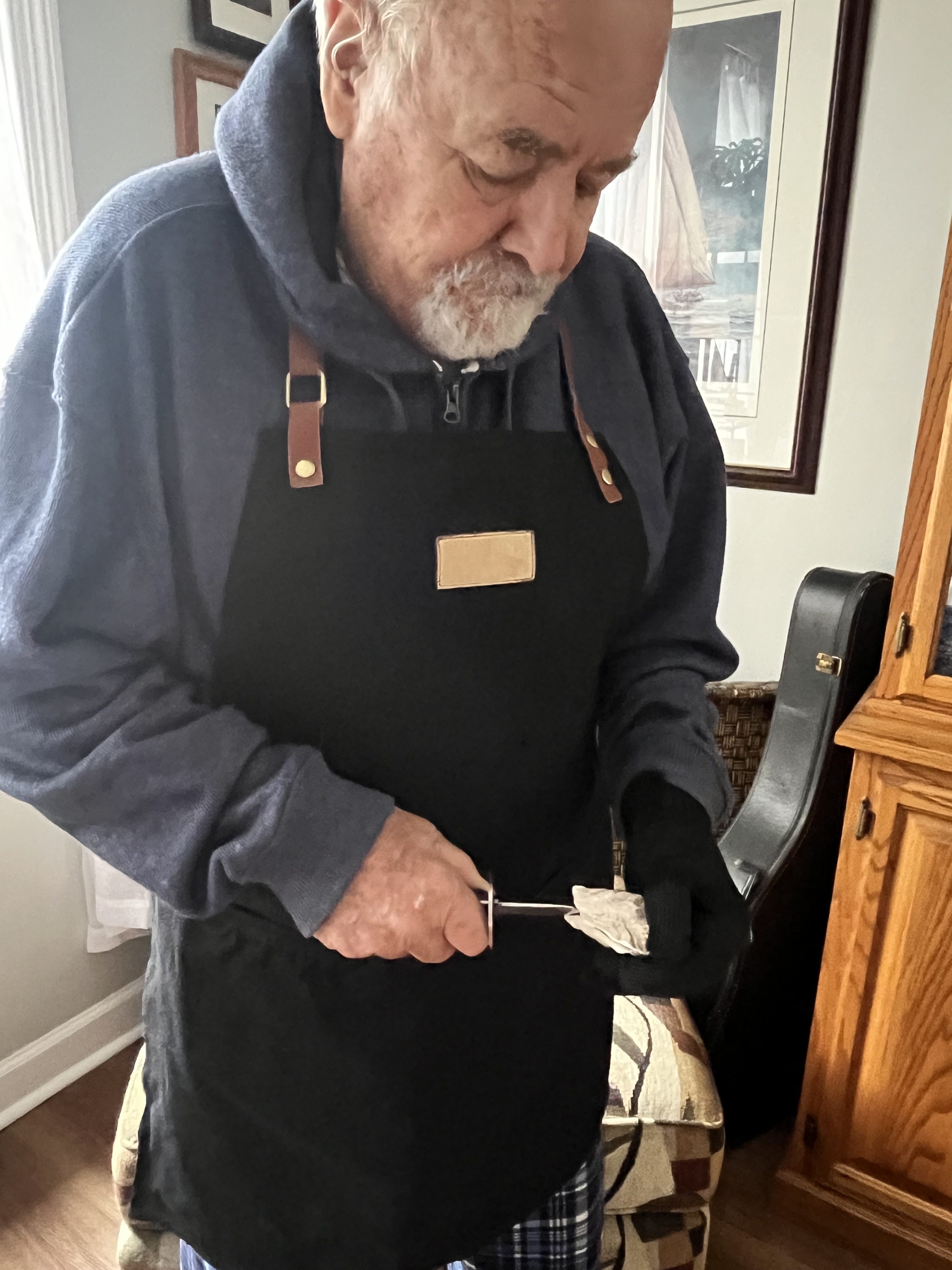
- What you need – An oyster knife (heavy-bladed with a guard) and a thick kitchen towel or cut-resistant glove.
- Prep the oyster – Clean the oysters thoroughly under cold running water with a stiff brush to remove grit.
- Secure your grip – Wrap your non-dominant hand in a towel or wear a glove. Place the oyster flat-side-up on a stable surface, holding it firmly. The hinge (the pointed end) should face toward your dominant hand.
- Find the hinge – Insert the tip of your oyster knife directly into the hinge. Wiggle it gently with steady, forward pressure. You are looking for the sweet spot where the knife locks into place.
- Pop the hinge – Twist the knife firmly like a doorknob or a car key until you feel and hear the hinge pop open.
- Cut the muscle – Slide the blade flat along the inside of the top shell to sever the adductor muscle attaching the meat to the upper shell. Discard the top shell.
- Release the meat – Gently slide the knife underneath the oyster meat to sever the bottom muscle attachment. Be careful not to spill the “liquor”—the natural ocean juice inside the shell.
Eating Raw Oysters
Eating an oyster should engage all your senses. True connoisseurs treat oyster tasting much like wine tasting.
- The Presentation – Serve raw oysters over a bed of crushed ice. Classic accompaniments include fresh lemon wedges, a sharp mignonette (red wine vinegar and minced shallots), cocktail sauce, or a dash of hot sauce. Use these toppings sparingly so you don’t mask the oyster’s natural flavor. I personally like to put some fresh grated horseradish on mine with a dash of tobasco sauce while Mr. prefers cocktail sauce or mignonette.
- The Technique – Pick up the shell, lift it to your lips, and tilt it back. Let the oyster and its natural liquor slide into your mouth together.
- The Chew – Do not just swallow it whole! Chew the oyster two or three times. Chewing releases the full complexity of the flavor—moving from initial ocean brininess to a creamy, mineral, or sweet finish.
The Art of Roasting
Roasting oysters mellows their intense brininess, plumps the meat, and offers a warm, savory alternative to raw serving. We have always done them on the grill so don’t have any experience with roasting them in the oven. Might be something we will try now that we are grill-less.
- What you need: A grill, oven, or open fire pit, and a seasoned topping (like garlic-herb butter).
- On the Grill: Preheat your grill to medium-high (around 400°F/200°C). Place whole, unshucked oysters flat-side-up directly on the grates. While not really necessary, Mr. Gastronome puts either a wet burlap bag (hard to come by sometimes) or a wet cotton towel (obviously use an old one since they have a tendency to get charred in the process) on top before you close the lid. Within 5 to 10 minutes, the shells will pop open slightly. Carefully remove them with tongs, pry the top shell off, add a spoonful of garlic/lemon butter, and let them bubble for another minute.
- In the Oven: Arrange shucked oysters on the half-shell on a baking sheet lined with crumpled foil or rock salt (to keep them steady). Top each with a compound butter, breadcrumbs, or cheese. Broil or bake at 450°F (230°C) for 7 to 9 minutes until the edges curl and the toppings are golden brown.

Eating Roasted Oysters
Eating roasted oysters is pure comfort food. The heat plumps the meat, mellows the sharp ocean brininess into a rich flavor, and melts whatever delicious toppings you choose to add.
Since roasted oysters are served hot off the grill or out of the oven, let them rest. We like to have people grab a plate and help themselves right at the grill as they are shucked. We let them put the melted garlic/lemon butter on themselves.
Give them a minute or two to cool so you don’t burn your hands or mouth. Here is how to eat and enjoy roasted oysters like a seasoned pro:
- Steady the shell – The shells will be hot and uneven. Hold the shell using a small cloth napkin or a kitchen towel to protect your fingers.
- Loosen the Meat – Unlike raw oysters, which slide right out, roasted oysters can sometimes stick to the bottom shell during the cooking process.
- The Tool – Use a small oyster fork, a regular cocktail fork, or even the tip of a butter knife.
- The Motion – Slide the fork gently underneath the plumped oyster meat to ensure the adductor muscle is completely severed from the bottom of the shell.
- Tilt and Slurp – Bring the shell to your lips, tilt the shell upward and slide the warm oyster, along with its savory juices and melted butter, directly into your mouth.
- Chew and Savor – Give it a couple of bites. Roasting changes the texture from slippery to tender and creamy, unlocking a deeply savory, slightly sweet flavor profile.
Classic Toppings to Try
If you are looking to elevate your roast, these are the gold-standard toppings applied just before or during the roasting process:
- The Rockefeller – A decadent mix of spinach, butter, breadcrumbs, and a splash of anisette or Pernod. This topping is a favorite offering in most seafood restaurants.
- The Southern Backyard Style – A drop of hot sauce, a tiny pinch of Cajun seasoning (Old Bay works as well), and a dusting of grated Parmesan cheese that gets bubbly and golden brown.
If you aren’t in the mood to DIY, there are several good restaurants in the area that will take care of the shucking for you. Landini Brothers/Fish Market and Murphy’s Grand Irish Pub here in Old Town are so dedicated to this bivalve that they have their own oyster beds they harvest from!